Peritraumatic Distress of COVID-19 on Physicians in Bangladesh: Implications and Policy Recommendations
Ahmad, Z., al Kium, A., Ahammed, M. R., Hamid, M. M., Tarannum, S., Amin, M. R., & Islam, M. D.
medRxiv · 2021
The first nationwide survey of frontline healthcare workers' peritraumatic distress in Southeast Asia: during the first wave of COVID-19 in Bangladesh, more than 78% of the 241 surveyed healthcare workers (237 of them physicians) were suffering from peritraumatic psychological distress. The study identifies the key stress factors and recommends easy-to-implement policies, co-developed with COVID-19-designated physicians.
The problem
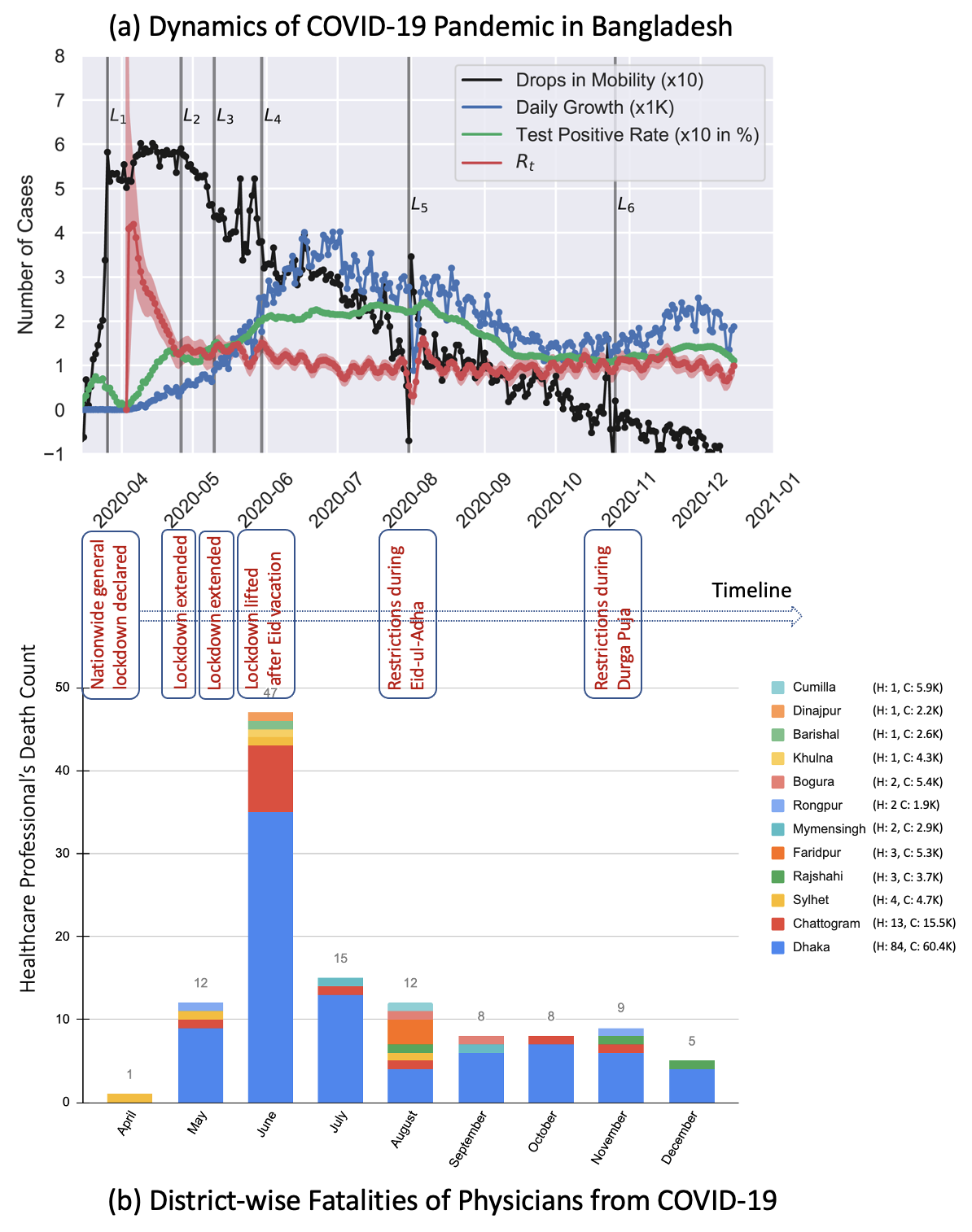
Bangladesh, a developing country with very limited resources, fought COVID-19 with frontline physicians and nurses under immense physical and psychological stress, compounded by social unawareness, absent preventive policies, increasing workload, and shortages of PPE, testing kits, oxygen, and ICU facilities. According to the Bangladesh Medical Association, 2,890 doctors were infected and 125 died by January 7, 2021 — and the share of physicians among Bangladesh's COVID-19 fatalities was reported to be the highest in the world.
What we did
We conducted a nationwide self-report survey during the pandemic's first wave, collecting 241 responses (237 physicians). Distress was measured with the COVID-19 Peritraumatic Distress Index (CPDI): 24 questions on a 0–4 Likert scale, where a total below 28 indicates mild distress, 28–51 moderate, and 52 or higher severe (Cronbach's α = 0.95). Because CPDI targets the general population, we added a physician-specific psychological stress questionnaire adapted for Bangladesh by four co-authors who were themselves designated COVID-19 physicians. We also analyzed the pandemic's transmission dynamics with an SEIR model to contextualize the crisis.
Key results
- More than 78% of respondents were suffering from peritraumatic psychological distress.
- The SEIR analysis showed a test-positive rate above 10% — double the WHO-recommended 5% — indicating that reported case counts underestimated the pandemic's true extent and the risk to frontline workers.
- The study recommends easy-to-implement policies to reduce physicians' peritraumatic stress, derived from the survey analysis and the suggestions of COVID-19-designated physicians.
From the paper