Inclusive Design of AI's Explanations: Just for Those Previously Left Out, or for Everyone?
ACM Transactions on Interactive Intelligent Systems, 16(1), Article 8
Ph.D. Candidate, Computer Science · Oregon State University
Corvallis, OR, USA · montaserhamid.com · PhD Advisor: Dr. Margaret Burnett and co-advisor: Dr. Anita Sarma, Oregon State University.
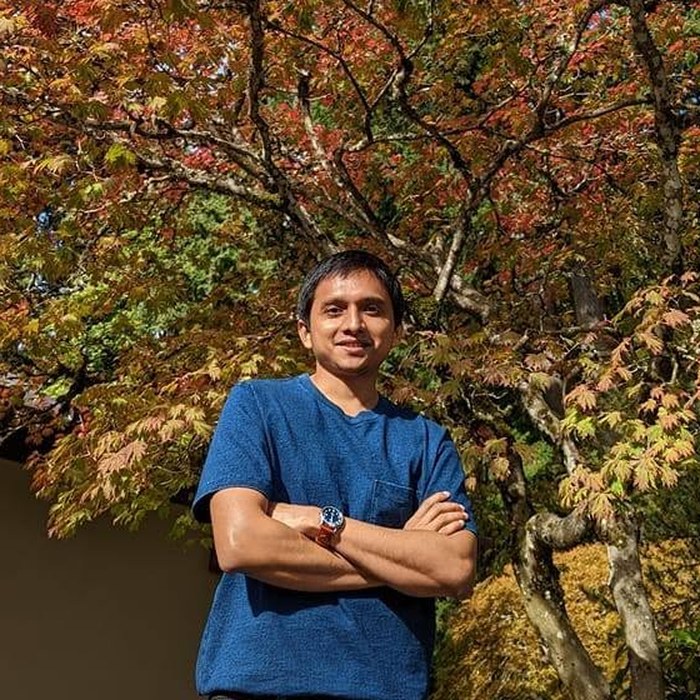
I work at the intersection of human–AI interaction, explainable AI (XAI), learning sciences, and user-centric design. My dissertation develops "Ed for AI", a design framework that treats AI explanations as a teaching–learning process: instead of only applying AI to improve education, I bring educational theories into the design of XAI systems so that explanations help users learn how AI works, not just receive information.
My broader research demonstrates that designing AI explanations for users whose problem-solving styles are often underserved can improve mental models of AI for everyone, showing a measurable "curb-cut" effect. Methodologically, I use mixed methods end to end, from theory-grounded hypothesis generation and interactive prototyping to user studies, controlled lab experiments, and qualitative and quantitative data analysis.
I am on the job market — graduating in March 2027 and seeking tenure-track faculty, postdoc, and research/applied scientist positions.
Inclusive Design of AI's Explanations: Just for Those Previously Left Out, or for Everyone?
ACM Transactions on Interactive Intelligent Systems, 16(1), Article 8
Intersectional HCI on a Budget: An Analytical Approach Powered by Types
International Journal of Human–Computer Interaction
"Over-the-Hood" AI Inclusivity Bugs and How 3 AI Product Teams Found and Fixed Them
Proceedings of the 31st International Conference on Intelligent User Interfaces (ACM IUI)
Visual Exploration of Large-Scale Image Datasets for Machine Learning with Treemaps
IEEE Transactions on Visualization and Computer Graphics, 29(1), 320–330 (Proc. IEEE VIS 2022)
How to Measure Diversity Actionably in Technology
In Equity, Diversity, and Inclusion in Software Engineering: Best Practices and Insights, Apress